Last week, North Macedonian Prime Minister Hristijan Mickoski once again demonstrated a lack of willingness for a genuine start to negotiations on the Republic of North Macedonia’s membership in the European Union. Speaking from the parliamentary rostrum in Skopje, he stated that he would not support amendments to the Macedonian constitution that would guarantee Bulgarians in the country the same rights enjoyed by the other recognized ethnic communities.
Arguments that block rather than solve
As justification, Mickoski cited the alleged “lack of basic rights for Macedonians in Bulgaria,” as well as the risk that Sofia might impose new conditions during the negotiation process. These arguments, however, repeat a familiar pattern of behavior—shifting the focus away from the concrete commitments undertaken by Skopje toward external accusations that do not lead to institutional progress.
The statement came amid growing anti-government protests in the country, driven by the lack of reforms, rising corruption, and a deteriorating standard of living. In this context, the refusal to pursue constitutional amendments appears less like a defense of national interest and more like an attempt at domestic political mobilization through confrontation.
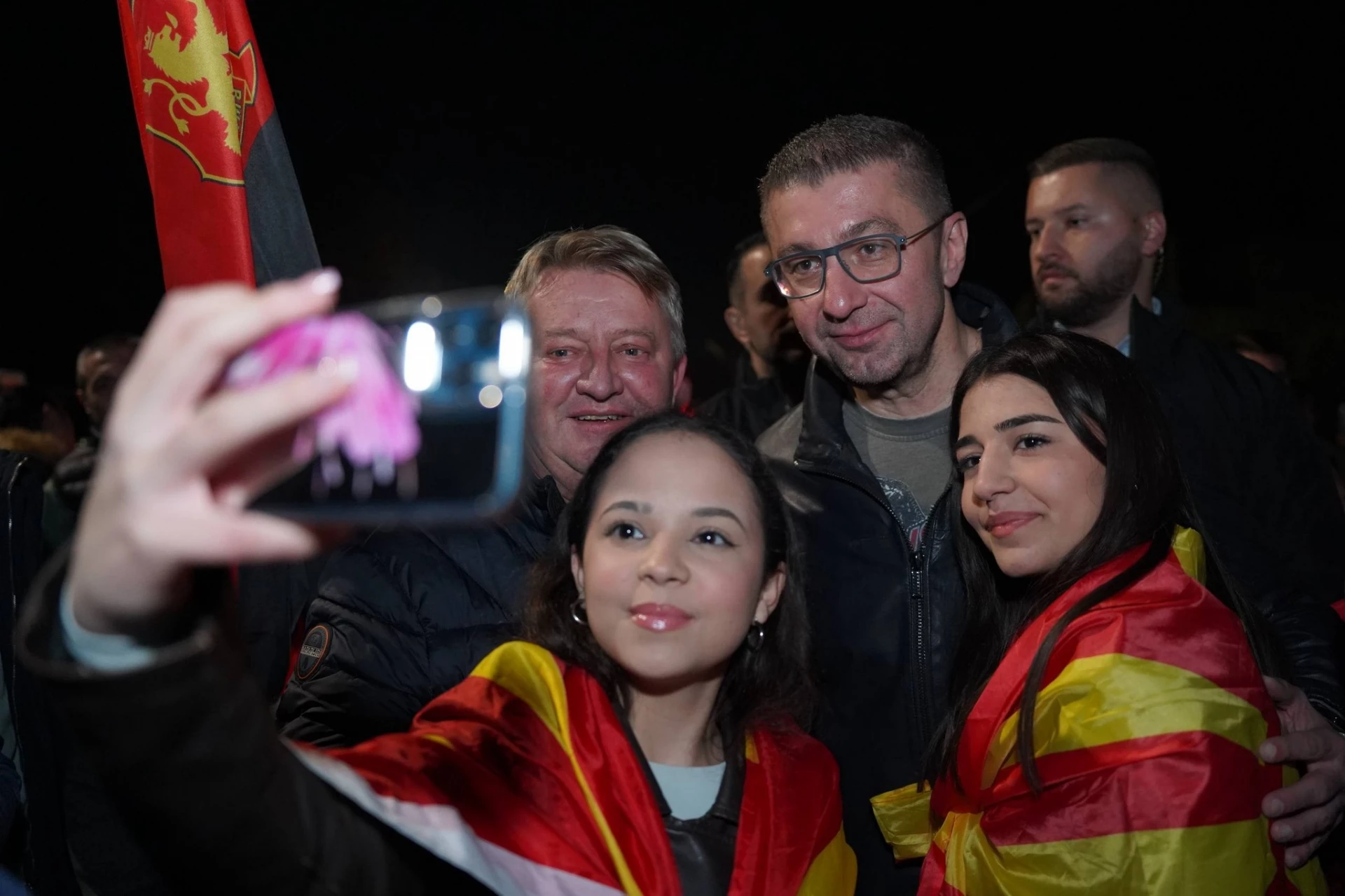
Violation of the Good Neighborliness Treaty
The Prime Minister of North Macedonia once again reiterated claims about a “Macedonian minority” in Bulgaria—a position that directly contradicts Article 11, paragraph 5 of the Treaty of Friendship, Good Neighborliness, and Cooperation between the two countries. This clause explicitly prohibits the government in Skopje from making such claims. Repeating them not only fails to bring the country closer to the EU but also undermines trust in the commitments already undertaken.
Promises in vain and the Logic of Failure
There is a clear cause-and-effect relationship between Mickoski’s insistence on unattainable conditions and the inability to fulfill key campaign promises—namely, restoring the former name “Republic of Macedonia” and compelling the EU to abandon the requirement that Bulgarians be listed as a recognized ethnic community in the country. Both objectives are incompatible with the European legal framework and with international agreements already in force. The result is political rhetoric without a viable outcome.
Hypocrisy With a Personal Dimension
Against this backdrop, the personal aspect is particularly telling. Actualno.com obtained and has seen a certificate of Bulgarian origin, a curriculum vitae, and a declaration by Stevitza Yaneva—the sister of Rosa Mickoska, the wife of Hristijan Mickoski. Stevitza Yaneva is a Bulgarian citizen who acquired citizenship based on proven Bulgarian origin. In her declaration, she states that her mother, father, their children—including her sister Rosa Mickoska — are Bulgarians.
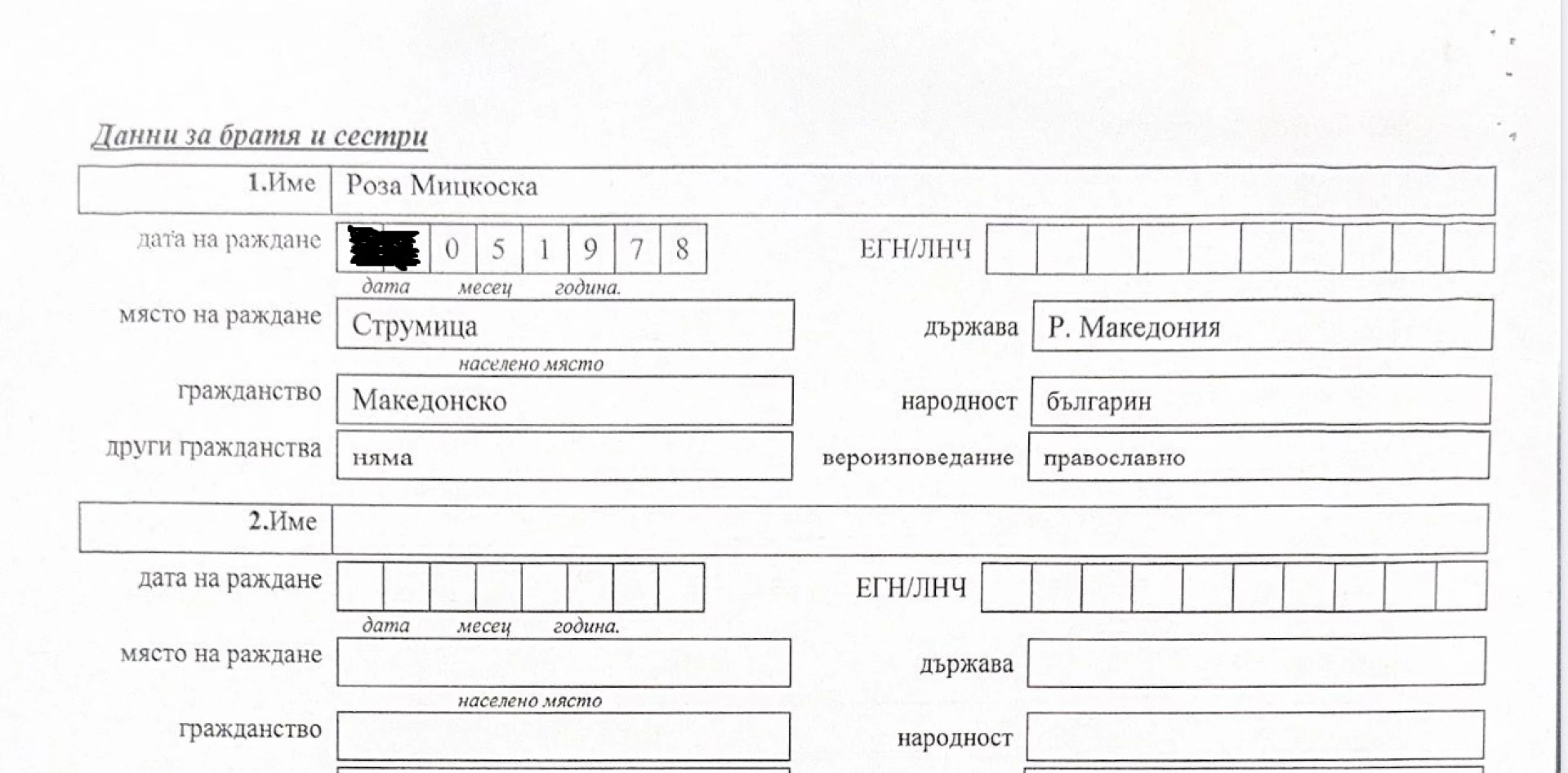
This inevitably raises the question: how does the Prime Minister of North Macedonia deny the rights of his own wife, and why does he refuse to recognize the rights of her family—people with a clearly stated Bulgarian identity? The political stance comes into direct conflict with personal reality.
Dependencies and External Influences
One explanation for this position lies in Mickoski’s increasingly visible dependencies on Serbian President Aleksandar Vučić. In recent years, public opinion in North Macedonia has noted a series of demonstratively close relations between the two—frequent meetings, coordinated political messaging, and alignment on sensitive regional issues. Skopje’s active participation in initiatives dominated by Belgrade, as well as its avoidance of a clear European stance, reinforces the impression of strategic alignment that does not serve European integration.
The refusal to recognize Bulgarians as an equal community, combined with personal and geopolitical contradictions, outlines a pattern of political hypocrisy. As long as this model dominates governance, North Macedonia’s path toward the EU will remain blocked—not because of external conditions, but due to internal decisions.